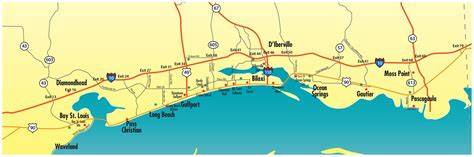
As you continue to head east from Pass Christian, you will find yourself in Gulfport.
The casinos, grand hotels and white beaches of Gulfport make it one of the largest tourism cities in the state.

In a previous post, I introduced four kinds of travelers: Dolly the Doer, Holly the Jolly, Molly the Mommy and Polly the Princess.
I’d consider myself to be more like Holly the Jolly. I could easily spend time in Gulfport – exploring the museums and art galleries.
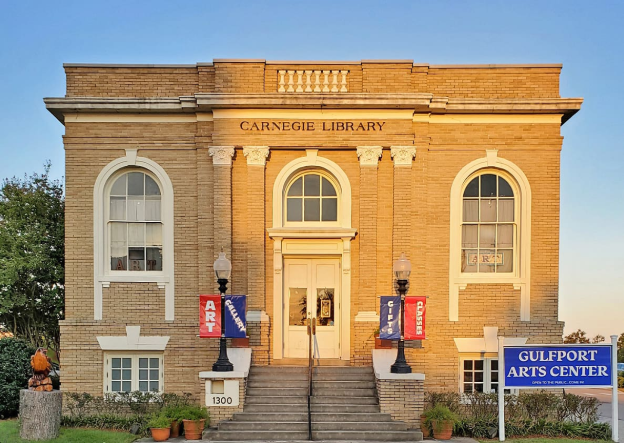
Gulfport Arts Center: The Gulfport Arts Center is in the local Carnegie Library building in Downtown Gulfport. The city of Gulfport recently completed a a $125,000 renovation to the museum.
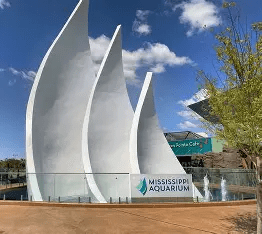
The Mississippi Aquarium (2401 14th Street): The state aquarium features an impressive three-story tank and a ‘petting zoo’ filled with rays and other sea creatures.
The 5.8 acre campus depicts the diverse habitats of the Mississippi River, Coastal Mississippi and beyond.
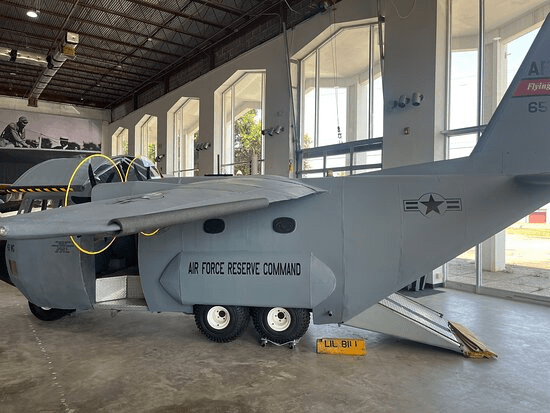
Mississippi Aviation Heritage Museum: The Mississippi Aviation Heritage Museum is another interactive museum, complete with flight simulators and cockpits.
The museum pays tribute to Mississippi pilots, particularly John C. Robinson, a Gulfport native and African American pilot from Mississippi.
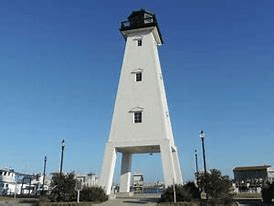
Ship Island: Once you have finished totally exploring Gulfport, catch a 50-minute ferry to Ship Island.
The island, located 11 miles south of Gulfport and Biloxi, has some of Mississippi’s plenty of most magnificent beaches and enough marine life to be well worth a visit.
Biloxi
Keep driving east along Highway 90, and you soon find yourself in Biloxi, the second-largest city in Mississippi.
Biloxi is often referred to “playground of the south” because of its many landmarks, beautiful coastline and pristine beaches, casinos, nightclubs and family-friendly venues.
Biloxi also has enough art to keep your feet on the pavement for a while.
Biloxi is home to several murals including:
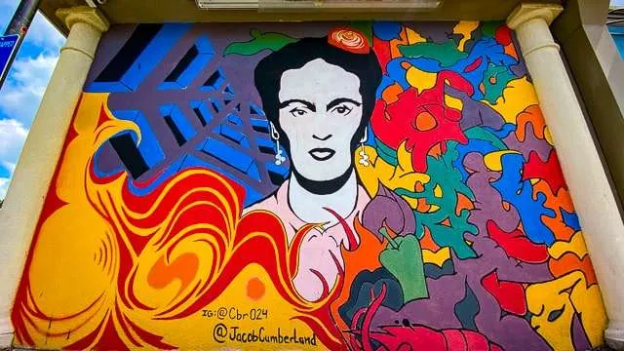
“Frida Kahlo” by Cody Bryan Richardson at the corner of 21st and 25th Street.
Kahlo (1907-1954) is considered one of Mexico’s greatest artists.
To say that Kahlo led a boring life is a drastic understatement.
Her life is portrayed in the 2002 film entitled Frida, a movie that was six Academy Awards…the 1983 book entitled Frida: A Biography of Frida Kahlo…and the 2024 Amazon documentary entitled Frida.
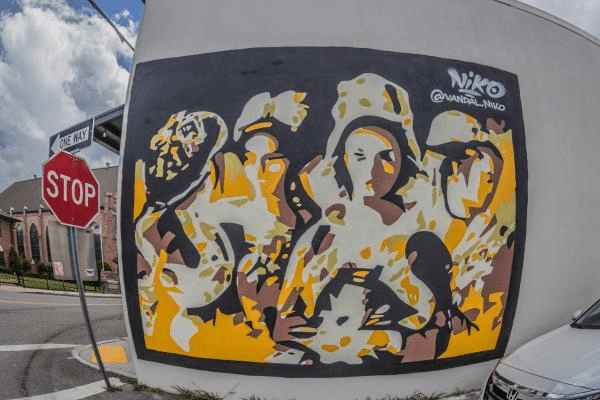
The Casquette Girls by vandal_niko – 871 Howard Avenue
This mural recognizes the Cassette or Casket Girls.
King Louis XIV sent 23 women to Biloxi in 1719. He was hoping to discourage the Frenchmen from chasing through the woods in pursuit of Indian mistresses.
These women, ranging in age from 14 to 19, were not prostitutes or convicts. They were not assigned husbands.
Instead, they were chosen to be sent to the Southern states of America.
Once in America, they spent time with the French men and were allowed to choose their own husbands.
A priest watched over these women and instructed the women to marry Frenchmen as quickly as possible.
They are called casquette or casket girls because of boxes, called casquettes, that they used to carry their belongings to a new world.
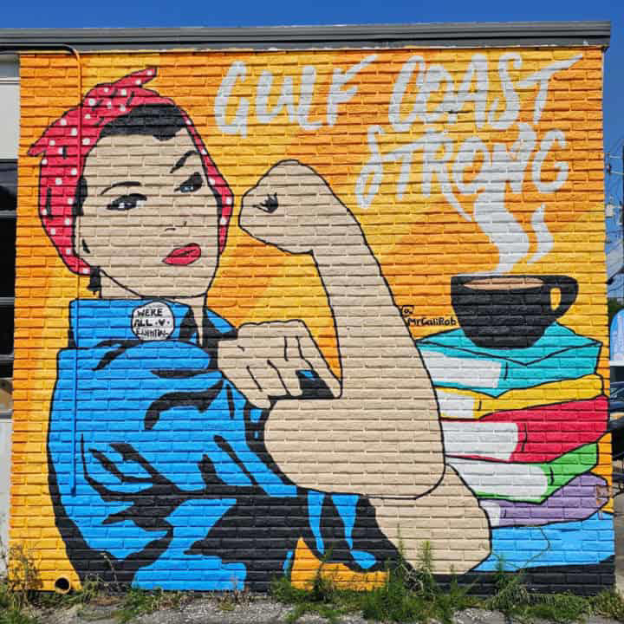
“Gulf Coast Strong” by MrCaliRob at Jacked Up Coffee (999 Howard Avenue)
This mural is the work of Gulf Coast artist, Mr. CaLi RoB! HimSeLf.
The design features Rosie the Riveter…proudly wearing a button that reads “We’re all essential.”
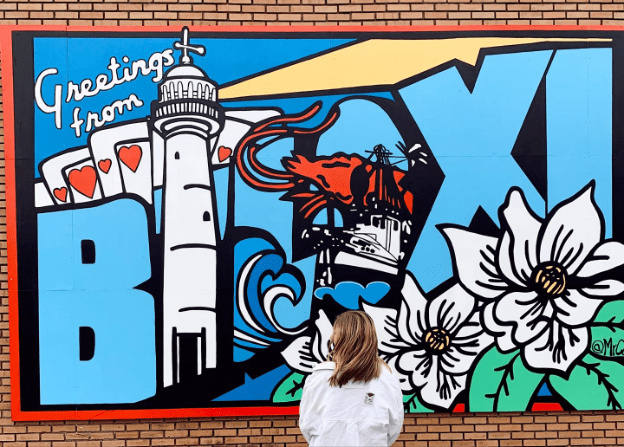
“Greetings from Biloxi” Mural: This mural is located on the side of a building at the intersection of Howard Avenue and G.E. Ohr Street. It is part of a downtown revitalization project in the Vieux Marché area.
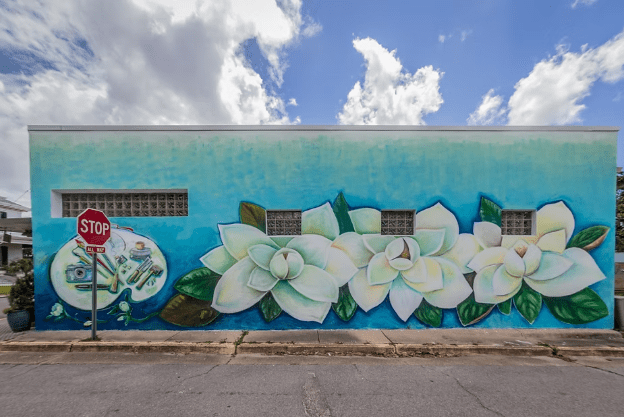
Magnolias – 773 Jackson Street
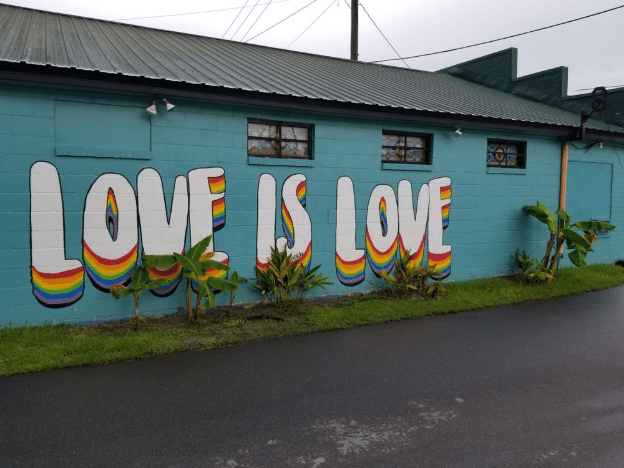
“Love is Love” Mural by MrCaliRob at Just Us Lounge (906 Division Street)
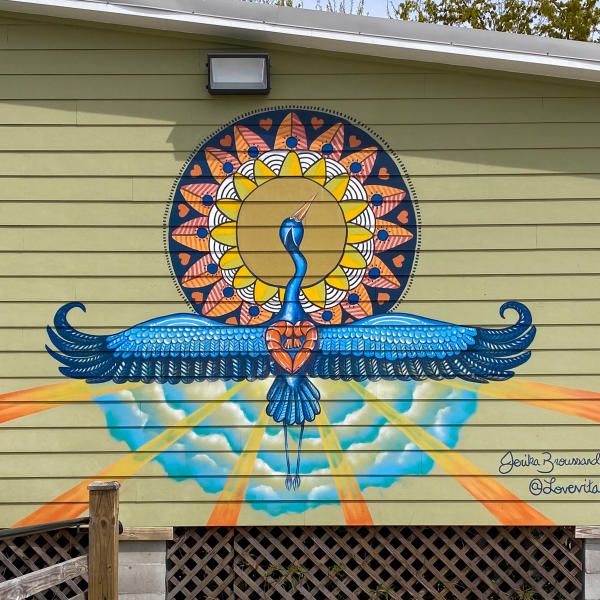
“Biloxi Bird” by Jerika Broussard (647 Howard Avenue)
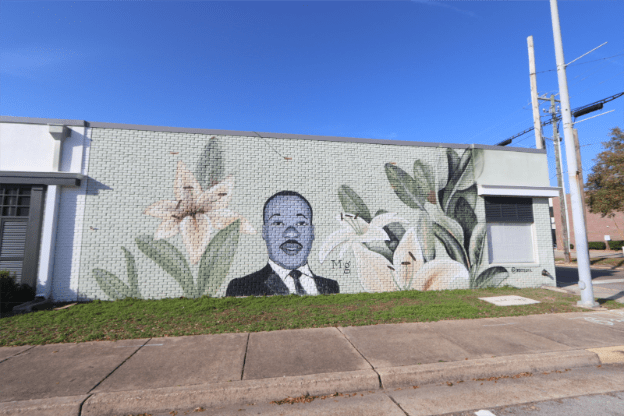
“Martin Luther King, Jr.” by Marian Glaser (Lameuse Street and Martin Luther King, Kr. Boulevard)
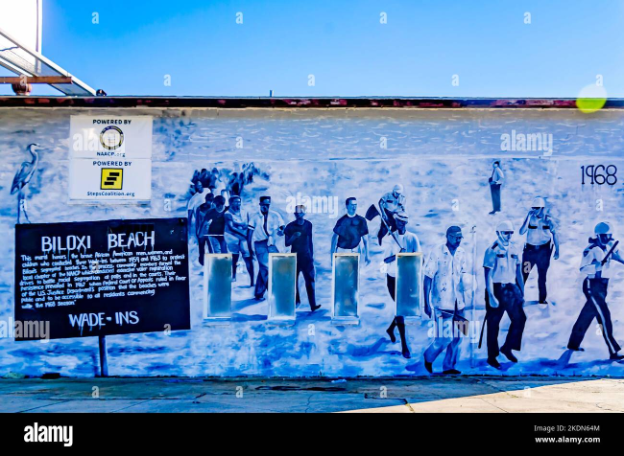
Biloxi Beach Wade-ins Mural by Demetrius Gayden (Division Street and Main Street)
This mural depicts the wade-ins at Biloxi that were part of the Civil RIghts movement…(more on this later)…
The idea for the mural came from Biloxi native and community advocate John Kemp.
The money for commissioning the artist came from the NAACP and Steps Coalition.
The artist was Demetrius Gayden.
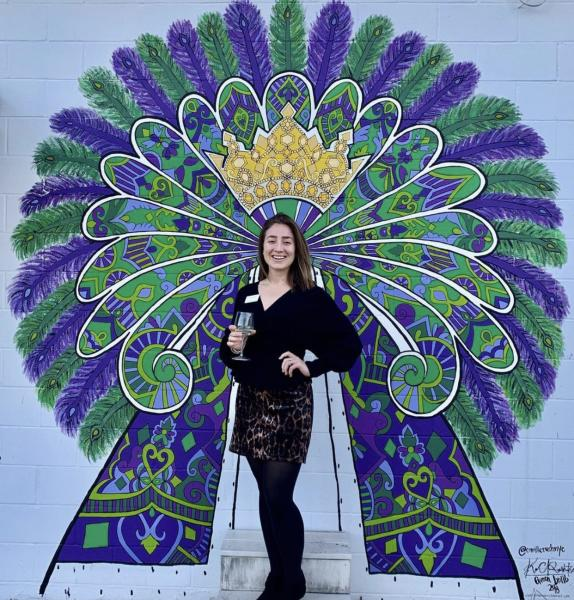
Mardi Gras Mural by Katherine Rushton located at the Coastal Mississippi Mardi Gras Museum (792A Howard Avenue)
This historic museum located in downtown Biloxi tells the glamorous story of Mardi Gras. Relics of the festivities along the Mississippi Gulf Coast include dazzling costumes, glass beads, doubloons, krewe favors, crowns and scepters.
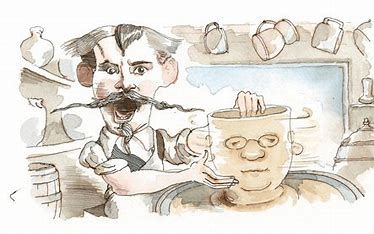
“The Mad Potter of Biloxi” by Zach DePolo located at Mahoney’s Cafe (Under I-110 Overpass)
This restaurant offers a charming dining experience in one of the oldest homes in the United States, built in 1737.
Diners can sit in the New Orleans-style courtyard or in its dining rooms embellished with chandeliers and antique portraits. This mural is part of a mural and sculptural initiative sponsored by the The Biloxi Public Art Project.
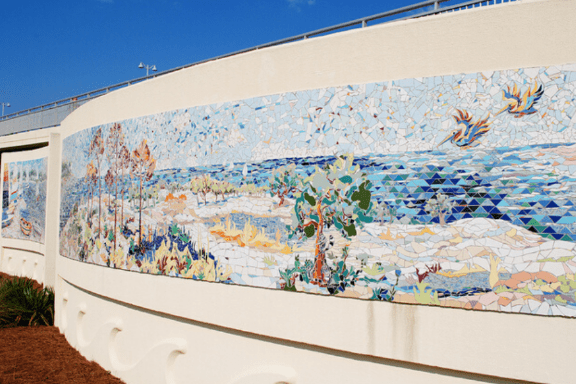
The Bridge Mosaic Mural (located on the East end of the Biloxi Bay Bridge – Highway 90)
This 120=foot long mosaic is the longest mosaic in Mississippi.
It consists of four large separate concrete mosaic panel pieces and depicts the natural beauty of the Mississippi Gulf Coast.
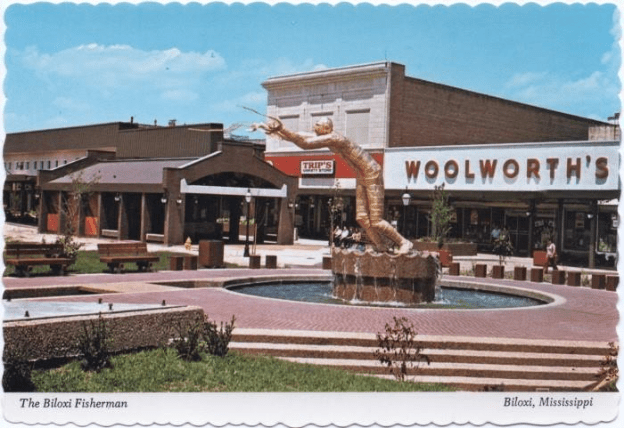
Golden Fisherman
This 15-foot tall statue was sculpted in 1977 by Ocean Springs artist Harry Del Reeks (1920-1982) to commemorate the seafood heritage and generations of commercial fishermen of the Mississippi Gulf Coast.
Though originally located in downtown, the statue was later moved to a location near the Maritime and Seafood Museum.
During Hurricane Katrina, the statue and many nearby buildings were washed away.
Afterwards, the statue was stolen from the former site of the Maritime and Seafood Industry Museum.
Soon the statue was found where the thieves had ditched it.
The torso was found in an overgrown area of weeds and bushes seven miles away. The legs and arms were found in a creek in Alabama.
Today a new replica of the statue stands on the front lawn of the Maritime and Seafood Industry Museum…honoring the fishing tradition of the Gulf Coast and welcoming visitors to Biloxi.
Maritime and Seafood Industry Museum: This museum offers a comprehensive look at Mississippi’s connection with the Gulf of Mexico.
Exhibits at the museum include a fully-restored sailboat built in Biloxi in 1898, shrimping equipment and an in-depth look at hurricanes.
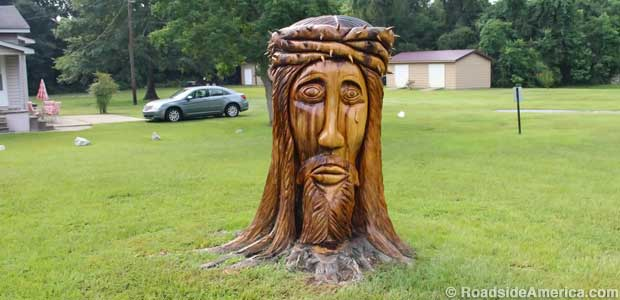
Marshall Jesus Sculpture (438 Silver Ridge)
During Hurricane Katrina in 2005, a lightning bolt blasted an oak tree next to the house of the Rev. Henry Marshall.
He let the tree stand for many years before having a vision of this stump being transformed to depict the head of Jesus.
Marshall hired Dave Perez, a local chainsaw artist, to transform the remaining stump.
In 2013, eight years after Hurricane Katrina, Perez cut the tree down to a six-foot-high stump and then carved it into a gaunt, wide-eyed Jesus head with a crown of thorns and a big teardrop.
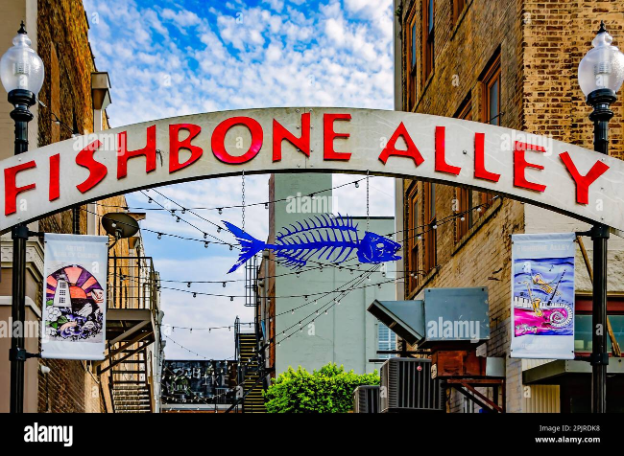
Fishbone Alley (1609 14th Street): To see more murals and grab a bite to eat, head over to Fishbone Alley…a place that features original local art and culture.
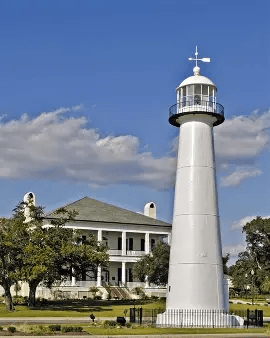
This lighthouse, one of the very first cast-iron lighthouses in the Southern states, has been standing in Biloxi ever since 1848.
The 64-foot tall lighthouse serves as an iconic to the strength and resolve of the area.
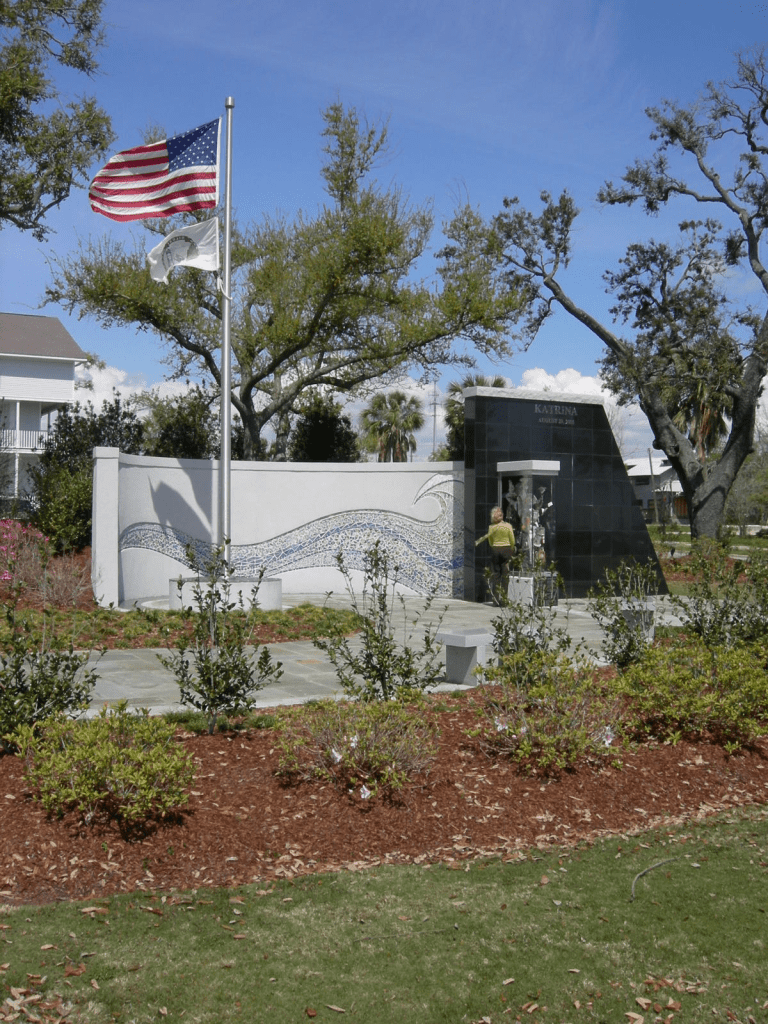
Katrina Memorial: (located at 133 Main Street – across from Hard Rock Casino)
This memorial is dedicated to the people who died during Hurricane Katrina.
This hurricane hit the area on August 29, 2005.
The memorial contains a the tile inlay of a wave, a glass case containing various items from destroyed buildings and the list of names of the people that died during the storm.


