
Any time I go anywhere, I like to first visit the Visitors Center…even though GPS is as close as my phone or my Apple watch. You can always get insider tips and coupons that you wouldn’t get otherwise.
So, the first stop on our trek along the Gulf Coast in Mississippi will be the Hancock County Visitors Center.
The visitor center is located on the first floor of the L&N Train Depot, a train depot dating back to the early 1900s. The center is open Monday to Saturday, 10:00 AM to 4:00 PM.

The visitor center is also home to the Alice Moseley Folk Art & Antique Museum.
This museum highlights the work of Alice Latimer Moseley, also known as “Ms. Alice.”
Mosely grew up in Birmingham, Alabama.
After earning a degree in education from the University of Alabama and marrying, she moved to Batesville, Mississippi – her husband’s hometown.
They later moved to Memphis where Mosely taught high school English and earned a master’s degree from the University of Memphis. She and her husband retired to Pope, Mississippi…near Enid Lake.
Moseley began painting as a hobby, at the age of 65, while caring for her mother who suffered from Alzheimer’s.

Mosely named this painting “Until Today I Thought I Was Folks.” This is the only painting Ms. Alice would not sell, even turning down an offer of $10,000 for the painting.
After her husband died in the spring of 1978, Ms. Alice began showing her paintings at art shows and flea markets throughout the South.
In 1988, at the age of 79, Ms. Alice fell in love with the city of Bay St. Louis.
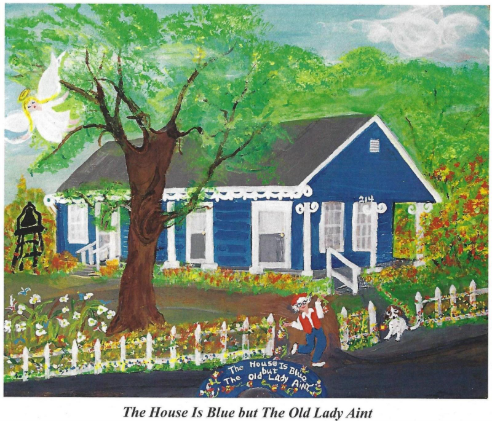
She moved into the Blue House.
The painting shown above it titled “The House is Blue but the Old Lady Aint.” This is her most famous painting.
Ms. Alice passed away on July 9, 2004…at the age of 94.
The 100 Men D.B.A. Hall: Now that we’ve stopped by the visitor’s center and taken in the museum located in the same building, it’s time to start exploring…specifically looking to take in as much art as possible.
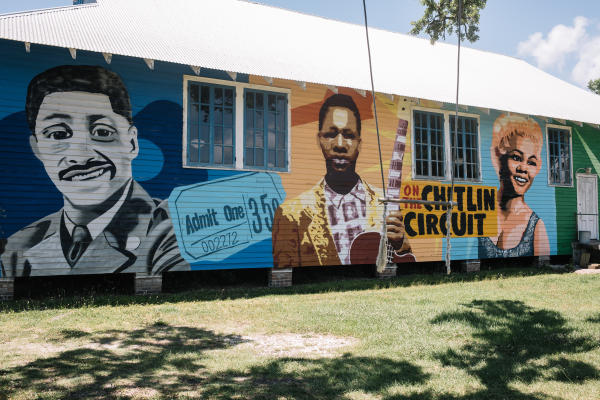
First, we are going to check out the mural right across the railroad tracks from the visitor center – at 303 Union Street.
This building is known as the 100 Men Hall.
The building was build by the One Hundred Members’ Debating Benevolent Association in 1922.
The One Hundred Members’ Debating Benevolent Association was established in 1894. The original twelve members shared one specific purpose – to “assist its members when sick and bury its dead in a respectable manner and to knit friendship.”
The original charter stated that “the Association may from time to time give entertainments for the purpose of replenishing the treasury.”
Many musicians from different genres – including blues, rhythm & blues and jazz – have performed here through the years, including Ray Charles and Etta James.
After World War II, as Bay St. Louis became more of a resort town, the 100 Men D.B.A. Hall became a stop on the “chitlin circuit,” a network of African American clubs, with many of the acts booked out of New Orleans.
Today the 100 Men Hall is one of the few tangible sites existing on the Mississippi Blues Trail.
The hall hosts live music events and innovative programs, as shown on their website.
The mural was painted by Wendo and JoLean to commemorate the artists that have performed here over the last century.
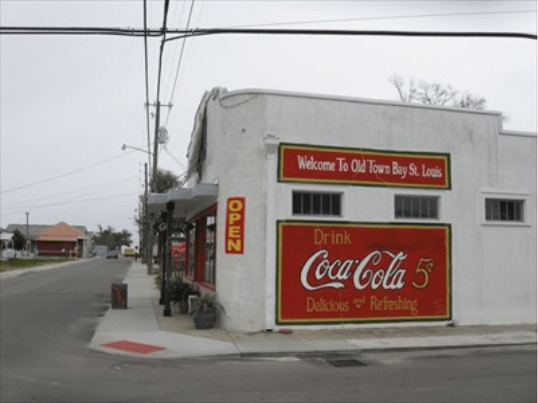
You will find a second mural in a historic Art Deco building at the corner of Main and Toulme Streets in Old Town Bay St. Louis, Mississippi.
There is a colorful mural of a big red tree on the south side of the building, and this Coke sign on the north.
This building houses Gallery 220, one of the most energetic artist co-ops on the Gulf Coast.
This art gallery which offers customers a diverse collection of art – paintings, sculptures, jewelry, mosaics, t-shirts, pottery, photography and so much more – for all tastes and price points.
The gallery also offers classes in painting, pottery and mosaics.
Other Murals in Bay St. Louis
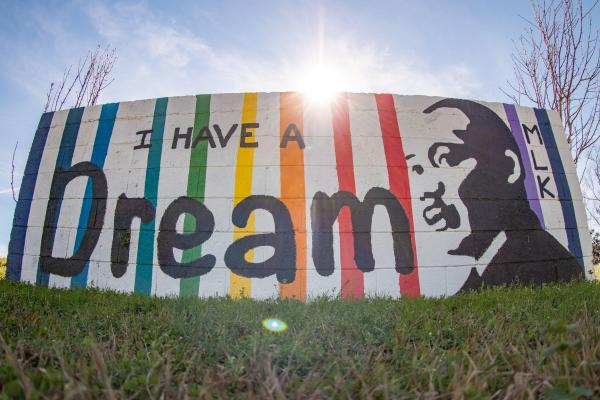
This mural, entitled “I Have a Dream,” is only one of the several murals found at Martin Luther King Park.
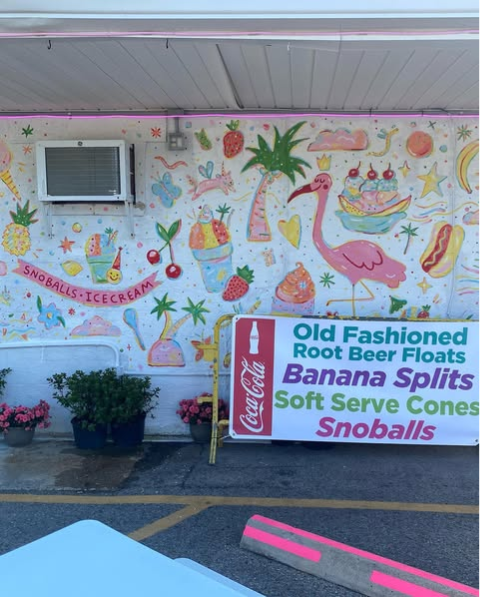
This mural, painted by Hannah Gumbo, is located at Ms Mary’s Ole Town Snoballs and Ice Cream Shop.

This mural, entitled “All Are Welcome Here” is the work of Ann Madden, a local artist.
Look for the mural at Mockingbird Café – 110 South Second Street.
While you’re there, be sure to grab a bite to eat.
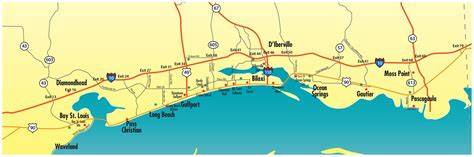
Once you’ve seen the murals and spent some time in Bay St. Louis, you will start traveling east towards Gulf Shores.

As you travel along Highway 90, keep an eye out for a series of unusual trees.
After Hurricane Katrina, wood sculptors began transforming old oaks and cypresses into works of art. These trees became symbols of recovery and resilience.
One example of these pieces of art is the “Angel Tree,” pictured above. This tree served as a refuge for three people and their dog during Hurrican Katrina.
Pass Christian
The next town that we will explore is Pass Christian.
This town looks like the pages of Southern Living magazine – very grand, historic beachfront homes hidden by a great canopy of live oak trees.
If you want to explore the architecture and history in this town, try this driving tour published on the Pass Christian Historical Society website.
 Bless Her Heart
Leave a comment